What INFINITI HR Learned at COCPA PEAK 2026: Five Business and Workforce Trends Every Employer Should Watch
Artificial intelligence, economic uncertainty, and changing workforce expectations are reshaping how businesses operate—and employers who adapt strategically will be better positioned to improve efficiency, manage risk, and drive sustainable growth.
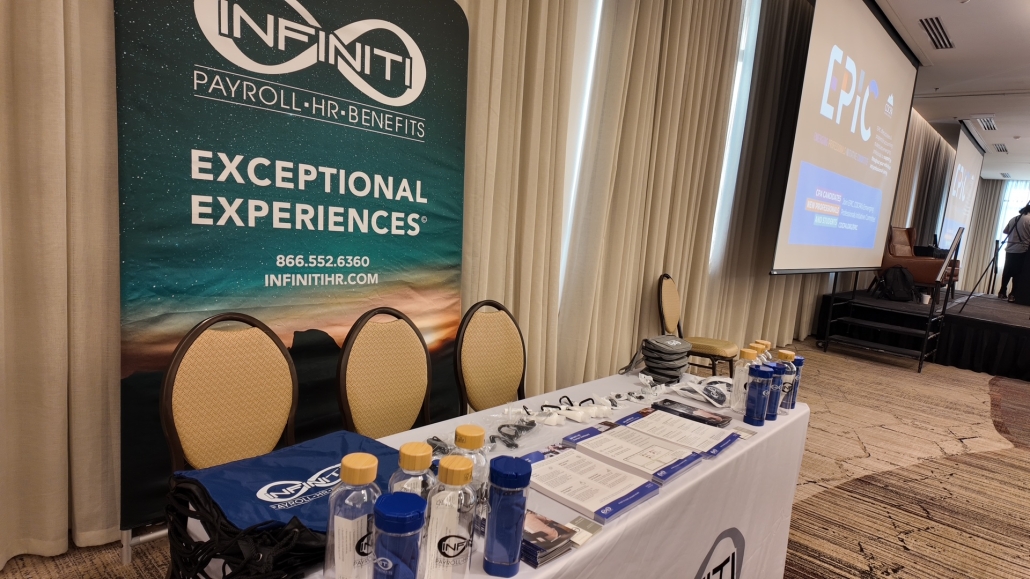
Recently, INFINITI HR attended the Colorado Society of CPAs (COCPA) PEAK Conference, where accounting professionals, business advisors, economists, and technology experts gathered to explore the forces shaping business performance in 2027 and beyond.
Sessions featuring Jennifer Wilson of Convergence Coaching, technology strategist Randy Johnston, and a Colorado economic forecast highlighted a common message: the future of business success depends on combining technology-driven efficiency with human expertise, proactive planning, and trusted strategic partnerships.
For employers, these insights extend well beyond accounting. They have direct implications for workforce management, payroll, benefits, compliance, employee retention, and operational performance.
Quick Answer: Five business and workforce trends from COCPA PEAK 2026 that employers should watch: AI is redefining the value of human expertise; integrated technology is becoming essential for operational efficiency; cybersecurity and AI governance are critical business priorities; economic pressures are reshaping workforce strategy; and businesses increasingly need proactive strategic partners rather than transactional service providers.
Here are five key trends that stood out and what they mean for employers heading into 2027.
1. How Is AI Redefining the Value of Human Expertise?
One of the strongest messages from COCPA PEAK 2026 was that artificial intelligence is changing how organizations deliver value.
As AI automates routine responsibilities, analyzes information, and makes technical knowledge more accessible, businesses must reconsider where human expertise provides the greatest competitive advantage.
Jennifer Wilson, Co-Founder and Partner of Convergence Coaching, emphasized that AI should not simply enable professionals to complete more work faster. Instead, organizations should use the capacity created by automation to strengthen relationships, improve strategic thinking, and deliver higher-value services.
For employers, this means rethinking how employees spend their time and which skills will matter most as technology evolves.
Critical thinking, sound judgment, communication, problem-solving, and relationship-building will become increasingly important as repetitive tasks are automated.
Organizations that successfully combine AI capabilities with human expertise can create opportunities to improve productivity while delivering stronger employee and customer experiences.
What Employers Should Do
Evaluate which repetitive responsibilities could be automated and identify opportunities to redirect employee time toward higher-value work. Invest in training that strengthens critical thinking, adaptability, communication, and problem-solving skills.
Rather than viewing AI exclusively as a cost-reduction tool, consider how it can help employees become more effective and valuable contributors to the organization.
2. Why Is Integrated Technology Becoming Essential for Business Efficiency?
Artificial intelligence is rapidly evolving beyond individual productivity tools toward connected systems capable of automating entire business processes.
During his technology update, Randy Johnston explored how AI agents, automation, and integrated software platforms could transform financial reporting, document management, payroll, customer communications, and other operational functions.
The greatest opportunity is not necessarily adding more technology. It is making existing systems work together more effectively.
For employers, disconnected HR, payroll, benefits, and financial systems can create administrative inefficiencies, duplicate data entry, reporting challenges, and unnecessary complexity.
Integrated technology can help organizations streamline workflows, improve data accuracy, strengthen reporting, and make more informed decisions.
As businesses evaluate new AI capabilities, they should also consider whether their existing technology infrastructure supports long-term efficiency and scalability.
What Employers Should Do
Conduct a technology assessment to identify disconnected systems, repetitive processes, and opportunities for automation.
Prioritize solutions that improve integration between HR, payroll, benefits administration, and financial reporting. Focus on measurable improvements in efficiency, accuracy, and operational performance rather than adopting technology simply because it is new.
3. Why Are Cybersecurity and AI Governance Becoming Business Imperatives?
As artificial intelligence becomes more deeply integrated into business operations, cybersecurity, data privacy, and responsible technology use are becoming increasingly important.
Randy Johnston emphasized that AI-powered systems may access sensitive financial, employee, and operational information, making clear governance and accountability essential.
For employers, the risks extend beyond traditional cybersecurity concerns.
Organizations must consider how employees use AI tools, what information can be shared, who has access to sensitive data, and when human review is required.
Without appropriate policies and oversight, even well-intentioned technology adoption can create unnecessary exposure.
As AI capabilities expand, businesses that establish clear safeguards and responsible operating practices will be better positioned to maintain employee confidence, protect sensitive information, and manage risk.
What Employers Should Do
Review existing cybersecurity practices and establish clear policies governing employee use of AI tools.
Address data privacy, access permissions, approved applications, employee training, and human oversight of AI-generated decisions.
Through its HR consulting services, INFINITI HR helps employers navigate evolving workplace policies, compliance considerations, and workforce management challenges.
4. How Are Economic Pressures Reshaping Workforce Strategy for 2027?
The Colorado Economic Forecast highlighted several challenges facing employers, including slower job creation, reduced population growth, elevated living costs, and declining business confidence.
Although Colorado remains a relatively wealthy state with a highly educated workforce, its historical economic growth advantages have weakened.
The presentation described a shift toward a low-hire, low-fire labor market, in which employers are retaining existing employees while becoming more cautious about expanding their workforce.
At the same time, demographic changes, retirements, housing affordability, and rising operating costs are creating additional challenges for workforce planning.
These trends reflect a broader business reality: employers must balance financial discipline with the need to retain talent, maintain productivity, and prepare for future growth.
For small and midsize businesses, that balance can be particularly challenging when internal resources are limited.
Employee retention, competitive benefits, workforce planning, and operational efficiency are becoming increasingly important components of business resilience.
What Employers Should Do
Review your workforce strategy for 2027, including hiring plans, employee retention, compensation, benefits, and productivity.
Identify opportunities to strengthen employee engagement while managing administrative and labor costs.
Employers should also consider whether their existing HR infrastructure provides the flexibility and expertise needed to navigate changing economic conditions.
Through its HR services and consulting and recruitment process outsourcing (RPO) solutions, INFINITI HR helps organizations strengthen workforce planning, support employee retention, and build more resilient teams.
5. Why Are Businesses Moving from Transactional Vendors to Strategic Partners?
Another major theme throughout COCPA PEAK 2026 was the growing importance of proactive advisory relationships.
Jennifer Wilson challenged professional service providers to move beyond completing transactions and responding to requests toward anticipating client needs, identifying risks, and helping organizations navigate change.
As technology makes information and routine services more accessible, businesses increasingly value partners who provide meaningful insight, sound judgment, and strategic guidance.
For employers, this shift is particularly relevant when evaluating HR, payroll, benefits, and workforce management providers.
A transactional provider may process payroll or administer benefits. A strategic partner helps employers consider how workforce decisions affect compliance, employee experience, operating costs, and long-term business performance.
This distinction becomes even more important during periods of economic uncertainty and rapid technological change.
Organizations need partners who understand their business, recognize emerging challenges, and help identify opportunities before problems become more costly or complex.
What Employers Should Do
Evaluate your current professional service relationships.
Are your providers simply completing administrative tasks, or are they helping you anticipate challenges, improve operations, manage risk, and plan for the future?
Look for partners who combine technical expertise with proactive communication, practical recommendations, and a genuine understanding of your business objectives.
At INFINITI HR, our approach to workforce management extends beyond administrative support to helping employers navigate HR complexities and focus on growing their businesses.
The Bottom Line
The biggest lesson from COCPA PEAK 2026 is that technology alone will not determine which businesses succeed in the years ahead.
Artificial intelligence and automation will continue to reshape operations, but sustainable competitive advantage will depend on how effectively organizations combine those capabilities with human expertise, responsible governance, workforce resilience, and strategic relationships.
As employers prepare for 2027, the priority should be building organizations that are more efficient, adaptable, and prepared for change.
That means investing in technology with a clear purpose, strengthening employee capabilities, protecting sensitive information, managing workforce costs, and surrounding the business with trusted advisors.
The organizations best positioned for long-term success will not simply adopt new technology. They will use it to make better decisions, empower their people, and build stronger businesses.
At INFINITI HR, we continue to monitor emerging workforce and business trends and help employers implement practical HR, payroll, benefits, and workforce strategies that improve operations, reduce administrative burdens, and support sustainable growth.
Key Takeaways
- AI is redefining professional value. As automation takes on routine responsibilities, employers should invest in human judgment, critical thinking, communication, and higher-value work.
- Integrated technology is becoming a competitive advantage. Connected HR, payroll, benefits, and business systems can improve efficiency, reduce administrative complexity, and support better decisions.
- Cybersecurity and AI governance are essential. Responsible technology adoption requires clear policies, data protection, employee training, and human oversight.
- Economic uncertainty is changing workforce priorities. Slower hiring, elevated costs, and demographic shifts are increasing the importance of employee retention, productivity, and strategic workforce planning.
- Strategic partnerships matter more than ever. Employers increasingly need proactive advisors who anticipate challenges, provide practical guidance, and help support long-term business performance.
Check out our recent blog, Level Funding vs. Fully Insured: Why Employers Are Rethinking Benefits for 2027, or come back for additional insights on human resources, payroll, insurance, benefits, and workforce management.